
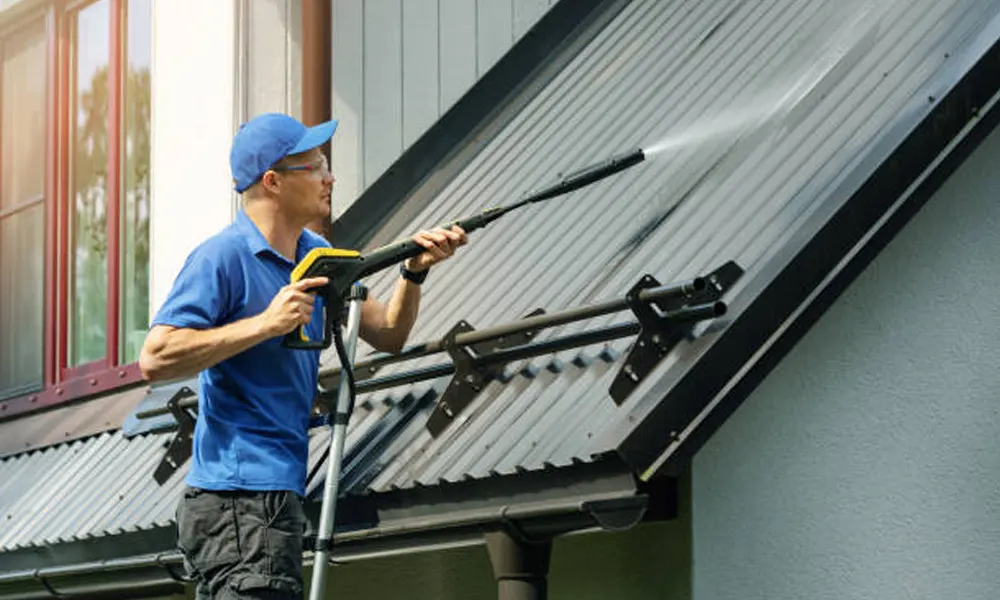
While property owners routinely maintain their property, roofing issues frequently go unnoticed until it’s often too late.
Discolouration, biological growth, and structural shifts serve as direct indicators that a roofer is needed to safeguard your property.
7 Indicators Your Property Requires Roof Maintenance
Property owners should monitor their houses roof warning signals:
- Visible Surface Colonisation: The appearance of green moss cushions along tile joints and vertical black streaks indicates active biological growth. These organisms thrive in damp environments, spreading rapidly across the substrate if left untreated.
- Debris and Aggregate Accumulation in Gutters: Finding protective tile sand-facings, heavy silt, or large pieces of dislodged moss inside drainage channels signals that the roof surface is actively degrading.
- Advanced Tile Discolouration: Distinct patches of the roof line turning significantly darker than surrounding areas points to deep-seated lichen and algae networks that slowly erode the tile face.
- Premature Aesthetic Aging: When a roof structure appears disproportionately weathered, stained, or aged compared to the rest of the property brickwork, it indicates deep surface contamination rather than normal wear.
- Exceeded Maintenance Windows: Crossing a three-to-five-year timeframe without a professional technical inspection generally means organic spores have established themselves within the porous tile layers.
- Internal Loft Moisture Signatures: The presence of localized damp patches, stained rafters, or damp insulation within attic spaces confirms that external biological growth has allowed water to breach the primary tile barrier.
- Post-Storm Substrate Displacement: Finding fragments of broken tile mortar or heavy organic biomass on ground surfaces following high winds indicates the roof infrastructure is losing its structural stability.
Jersey Climate Conditions Accelerate Roof Degradation
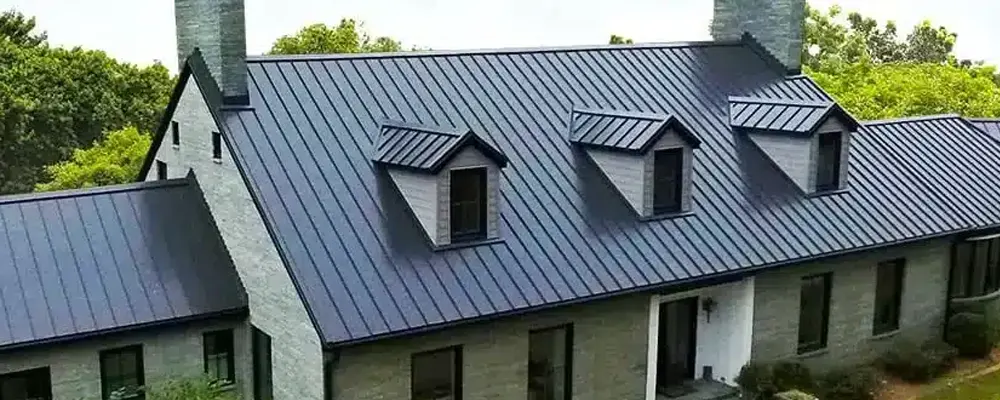
Our Jersey weather brings high moisture, strong winds, and salty sea air that cause moss and algae to grow rapidly on our roofs.
Microscopic spores embed deep within the porous surfaces of clay and slate tile profiles, triggering premature material weathering.
Coastal Salt Spray Accelerates Moss Algae Lichen Growth
Coastal salt spray deposits mineral nutrients onto external roof tiles, creating a fertile, highly alkaline environment for target organic organisms.
What our roof maintenance experts observed during recent Channel Islands property inspections was that north-facing slate profiles exposed to marine air currents develop double the biological depth found on inland microclimates.”
As these organisms mature, their root-like structures, known as rhizoids, physically penetrate the tile substrate, causing deep microscopic fractures that compromise the integrity of the roofing.
High Humidity Environmental Factors Generate Black Staining
High humidity maintains a constant state of dampness across roof slopes, fueling the rapid proliferation of dark Gloeocapsa magma cyanobacteria.
This produces a protective, dark-pigmented sheath that manifests as unsightly black staining across roof tiles.
These black patches actively absorb solar radiation, artificially elevating attic temperatures and destabilising the thermal dynamics of the property.
Structural Property Maintenance
Structural property maintenance triggers require immediate inspection to prevent exterior issues from evolving into full-scale building failures. Postponing maintenance significantly increases long-term remedial capital expenditure.
Moss Accumulation Blocks Gutters Causing Gutter Overflows
Moss accumulation dislodges from the roof surface during heavy rainfall, falling into drainage channels, causing gutter overflows.
This blocked drainage forces water back up under the bottom tile courses, rotting fascia boards and water down the external walls.
Excessive Biomass Increases Timber Dead Load Stress
Excessive biomass acts as a heavy sponge, retaining substantial volumes of rainwater and increasing the dead load stress exerted on supportive roof timbers.
This additional weight strains structural trusses beyond their engineered capacities, forcing roof lines out of alignment.
Severe Seasonal Storms Displace Roof Tiles
Severe seasonal storms which we have seen more of in recent years, with winds that physically displace compromised, moss-weakened roof tiles.
The removal of these tiles leaves the underlayment exposed to wind-driven rain penetration.
Hidden Leaks Signal Structural Sagging Inside Lofts
Hidden leaks visible during internal loft inspections indicate that moisture has breached the outer tile layer and started structural timber decay.
If you see dark stains, damp insulation, or visible structural sagging along rafters, the roof substrate requires immediate intervention.
Health and Safety Inspectorate Regulates Jersey Construction Activities
The Health and Safety Inspectorate (HSI) enforces strict statutory parameters across all external property maintenance conducted across the island.
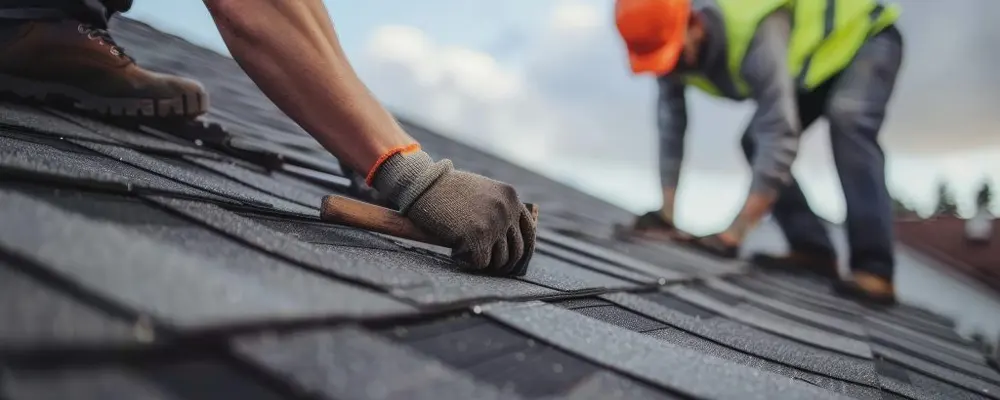
Homeowners assume the legal obligations when commissioning commercial contractors to work on their domestic properties.
Health and Safety Management Construction Jersey Regulations Mandate Risk Assessments
Health and Safety Management in Construction Jersey Regulations require the execution of comprehensive, site-specific risk assessment processes prior to starting work.
Contractors must document every predictable hazard, establishing clear operational protocols to safeguard both site workers and members of the public.
Unsafe Work Height Practices Trigger Prohibition Notice Enforcement
Unsafe work at height practices observed by regulatory bodies result in immediate Notice enforcement, shutting down site instantly.
Homeowners who contract uncertified, uninsured operators exposing workers to unsecured fall risks face secondary legal liabilities and severe financial penalties.
Mandatory Safe Work Method Statements Protect Homeowners
Mandatory safe work method statements protect homeowners by legally establishing that the contracted business operates in full compliance with island safety legislation.
These documents define the exact sequence of actions, access strategies, and emergency procedures that will govern the project.
Operational Safety Controls Mitigate High Access Cleaning Risks
Operational safety controls eliminate the dangers associated with technical wash procedures at height. Contractors have systems rather than walking directly on fragile, weathered tile structures.
Mobile Elevated Work Platforms Ensure Secure Fall Prevention
Mobile elevated work platforms (MEWPs) provide stable, fall prevention by allowing workers access roof perimeters without setting foot on the tiles. This approach eliminates point-load stress on old roofing while maintaining a safe, stable working zone.
Secure Equipment Tethering Prevents Ground Hazards
Secure equipment tethering dictates that all high-pressure lines, lances, and manual scrapers must be anchored to the worker’s safety harness or platform structure. This preventative control eliminates the risk of dropped tools injuring people or damaging ground-level property.
Water Jetting Association Technical Qualifications Verify Operator Competence
Water Jetting Association accredited technical qualifications confirm that the technicians have undergone strict training to operate high-pressure hydro-demolition and cleaning machinery. Certified operators understand how to manage reaction forces safely, avoiding sudden imbalances that cause falls.
Professional Roof Cleaning Methods Safeguard Structural Integrity
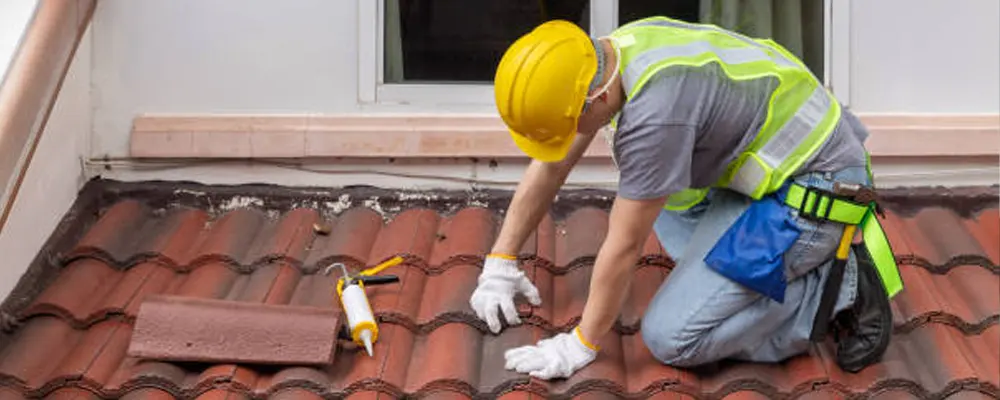
Professional roof cleaning methods employ highly specific, calibrated techniques designed to eliminate contaminants without degrading the underlying building materials. Amateur attempts using incorrect methods destroy expensive roof structures.
Soft Washing Biocide Treatments Inhibit Future Spore Regrowth
Soft washing using low-pressure equipment applies biocide treatments that chemically break down the cellular walls of moss, algae, and lichen. This chemical solution sanitises the tile surface entirely, sinking into the porous substrate to destroy hidden root systems and inhibit future spore regrowth for several years.
Pressure Washing Hazards Cause Cracked Tiles Missing Mortar
Pressure washing hazards include the accidental removal of protective tile sand-facings, structural tile cracking, and the complete destruction of ridge cap pointing.
Manual Scraping Techniques Protect Older Roof Assets
Manual scraping techniques using blades shaped to match the specific curve of your roof tiles, carefully lifting dense moss blocks away without applying force. This meticulous hand-tool process preserves the fragile, weathered surface of historical slate and clay tiles.
Jersey Planning Determines Maintenance Legality
The Jersey Planning and Building Framework dictates what modifications can be legally made to domestic exteriors across all island parishes. Unapproved alterations to protected properties can lead to enforcement action and significant fines.
Listed Buildings Places Restrictions Govern External Visual Impacts
Listed Buildings and Places development restrictions explicitly ban the use of aggressive chemical washes or harsh physical alterations that alter the historical character of a protected site. Any maintenance intended for historic structures requires prior consultation or a application for Heritage consent.
Conservation Areas Visual Impact Regulations Limit Material Alterations
Conservation Areas visual impact regulations govern how roofs look from public spaces, preventing choices that compromise local architectural character. Professional roof cleaning services ensure that property finishes comply with parish visual standards.
General Maintenance Classification Avoids Planning Permission Delays
General maintenance classification guidelines state that non-destructive roof cleaning and minor like-for-like tile repairs are exempt from formal planning applications. By using certified, non-invasive maintenance methods, homeowners can complete essential property preservation work without planning permission delays.
Leave a Reply Cancel reply
Your email address will not be published.Required fields are marked *
Comment *
Name *
Email *
Website
Save my name, email, and website in this browser for the next time I comment.